
Author:

Featured

Airport Car Service Price NYC: Smooth Rides, Stress-Free Flights

Where Every Mile Feels Like First-Class Service

Traveling can be chaotic enough without having to worry about how you’re getting to or from the airport. That’s where a professional airport car service changes everything. It’s not just about getting from point A to point B—it’s about convenience, comfort, and knowing that everything is taken care of before you even step into the terminal. Whether it’s a business trip, a family vacation, or a long-awaited getaway, reliable airport transportation adds a layer of calm to what’s often a hectic part of the day. Check out the airport car service price NYC here.

Booking a car service means leaving behind the frustration of last-minute rideshares, overpriced parking, or dragging luggage across crowded parking decks. Instead, there’s a vehicle waiting, a driver who understands timing, and a smooth, seamless ride that begins and ends right at your doorstep. It’s especially helpful for early-morning flights or late-night returns when energy is low and timing is everything. That sense of reliability makes all the difference—especially when travel plans are tightly scheduled or unpredictable.

There’s also a comfort level that comes with a dedicated airport service. These vehicles are often spotless, spacious, and designed for relaxation. With plenty of room for luggage and the luxury of not having to navigate traffic or unfamiliar roads, passengers can sit back, check emails, make a call, or simply recharge before a flight. For frequent travelers, that quiet time is a small luxury that turns travel days into something far less taxing.

Airport Car Service Price NYC

For families, airport car services offer peace of mind. Traveling with kids or groups can be logistically tricky, and having a larger vehicle ready to accommodate everyone safely takes a lot of pressure off. Even for solo travelers, it’s about ease—no searching for shuttles or flagging down taxis. Everything is pre-arranged, punctual, and tailored to your needs.

What sets a premium airport car service apart is the focus on experience. Drivers are professional, routes are planned, and customer care is built into every step. It’s not just about driving—it’s about making travelers feel taken care of, from curb to curb. That attention to detail, that sense of being one step ahead, makes all the difference when it comes to starting or ending a journey on the right note.

Reliable, polished, and refreshingly easy, airport car services are the travel upgrade that often goes unnoticed—until you experience it for yourself. Once you do, it’s hard to go back. Because when travel begins with confidence and ends with comfort, every trip feels just a little bit better.

Featured

Smart Office Solutions That Help Small Companies Work Smarter

Making the Most of Your Space and Budget with Scalable Office Strategies

Small companies are built on big ideas, but that doesn’t mean the office space needs to be oversized or overcomplicated. With the right Hilliard Office Solutions in place, even the most compact workplace can feel efficient, professional, and ready to grow. Whether the team is five people or fifteen, creating a productive environment depends less on square footage and more on smart choices that reflect the company’s needs, goals, and rhythm of work.

One of the most important aspects of any office—especially for smaller companies—is flexibility. As teams evolve and roles shift, the layout should be able to adapt without requiring a major overhaul. Modular desks, movable partitions, and multifunctional furniture can instantly make a space more versatile. A meeting area might double as a break zone, while shared desks can be transformed into private workstations with subtle dividers or acoustic panels. These thoughtful adjustments not only maximize space but also support collaboration and focus, depending on the task at hand.

Technology also plays a pivotal role in streamlining operations. Cloud-based systems, wireless setups, and smart office tools reduce the need for bulky hardware and free up both physical and mental space. When employees can connect and collaborate seamlessly, productivity rises—no matter the size of the room. Digital solutions like project management apps, virtual whiteboards, and even cloud storage bring a level of professionalism and efficiency that helps small businesses compete with larger counterparts.

Hilliard Office Solutions

Another key part of office strategy is creating an atmosphere that feels inspiring, not cramped. Natural light, clean design, and a few carefully chosen details can go a long way in making a small office feel open and welcoming. Companies don’t need massive renovations or designer budgets to achieve this—sometimes all it takes is a well-placed plant, an ergonomic chair, or better lighting to transform the way a space supports its people.

It’s also worth noting how the right office solutions impact brand image. When clients or partners step into a tidy, functional, and well-organized office, it reflects a business that’s prepared, thoughtful, and serious about its mission. The office becomes an extension of the brand—showcasing not just what the company does, but how it operates.

For small businesses ready to scale or simply streamline their day-to-day operations, investing in the right office solutions is a game-changer. It’s not about how much space there is—it’s about what’s done with it. With a few strategic choices, any office can feel bigger, work better, and support the ambitions that drive a growing business forward.

Featured

When Investments Go Wrong: A FINRA Arbitration Lawyer Can Help

Protecting Clients from Financial Harm Caused by Broker Misconduct

Navigating the world of investments can feel like walking a tightrope, especially when the people entrusted to guide those decisions fall short of their responsibilities. Broker misconduct happens when advisors prioritize profit over clients’ financial wellbeing, leading to losses that can shake confidence and security. Such behavior isn’t simply a misstep; it’s a serious violation of fiduciary duty that can cause lasting damage. Turning to a dedicated FINRA arbitration lawyer is a crucial step toward holding brokers accountable and recovering what’s rightfully yours. At www.investmentlosslawyer.com, clients find experienced advocates ready to stand by their side through every phase of the dispute process.

Investment disputes often revolve around unsuitable recommendations, reckless trading, or hidden fees that weren’t properly disclosed. These issues aren’t just technical errors; they represent a breakdown of trust between client and advisor. When investment choices don’t align with a person’s risk tolerance or long-term goals, the financial fallout can be severe. This is where a seasoned FINRA arbitration lawyer makes a difference, bringing deep understanding of regulatory frameworks and proven strategies to resolve complex claims. The goal is not just to secure compensation but to restore a client’s financial footing and peace of mind.

The journey through arbitration or litigation can be overwhelming, especially when complicated paperwork and procedural details come into play. Legal experts provide clear guidance and personalized support, ensuring clients are never left in the dark.  From the initial evaluation through negotiation or trial, having a lawyer with a track record of success means every angle is explored. This attention to detail and client-first approach helps to maximize recovery and bring a measure of justice where it’s due.

www.investmentlosslawyer.com

Broker misconduct cases also often involve intricate financial data, making expert legal representation essential. Lawyers with extensive experience in FINRA arbitration know how to dissect portfolios, identify breaches, and gather compelling evidence that strengthens claims. Their ability to collaborate with financial experts and analysts often proves critical in building a case that withstands scrutiny. This layered approach to dispute resolution not only increases the chances of success but also provides clients with a clearer understanding of what happened and why.

Choosing a legal partner who understands the high stakes of investment loss cases is vital. Fee transparency, clear communication, and a commitment to clients’ best interests are hallmarks of the service offered by expert FINRA arbitration lawyers. They know that beyond the numbers, there are lives and futures at stake. By standing firm against broker misconduct, these attorneys don’t just fight for financial restitution, they fight to uphold the integrity of the client-broker relationship itself.

For anyone facing the fallout of broker wrongdoing, taking swift action can be the difference between moving forward and remaining stuck in uncertainty. Trusted legal help at professional team of this law office provides the tools, knowledge, and advocacy necessary to navigate this challenging terrain. When investments go wrong, a skilled FINRA arbitration lawyer isn’t just an option, they’re the lifeline to reclaiming control and rebuilding financial security.

Featured

Making the Most of Every Inch: Smart Design for Tight Floor Plans

Small Spaces, Big Potential—How Thoughtful Layouts Change Everything

Living in a compact home or apartment doesn’t mean sacrificing comfort, functionality, or personal style. With tight floor plans becoming more common in urban developments and modern builds, smart spatial planning is more important than ever. It’s not just about fitting furniture into a room—it’s about reimagining how space is used, how movement flows, and how every corner can serve more than one purpose. When tight floor plans in small spaces are done right, even the smallest spaces can feel open, inviting, and surprisingly versatile.

At the heart of any efficient small space is a layout that prioritizes movement and flexibility. Open-concept designs help eliminate unnecessary walls and create zones that feel larger than their actual dimensions. It becomes less about having many rooms and more about how each area functions. For example, a single open space might serve as a living area by day and a bedroom by night, using adaptable furniture like fold-out beds, compact sectionals, or sleek built-in storage that keeps clutter hidden.

Tight Floor Plans In Small Spaces

Designing for tight floor plans also demands a new mindset about storage. Rather than relying solely on bulky cabinets or closets, the best solutions blend into the architecture—think raised platforms with hidden drawers, floating shelves, or storage built into seating. Vertical space becomes incredibly valuable, and so does furniture that works double-duty. Every piece added to the room needs to earn its place by offering more than just looks—it should solve a problem, streamline a routine, or offer clever storage in disguise.

Lighting plays a huge role in making a small space feel less confined. Natural light should be maximized wherever possible, using sheer curtains or strategically placed mirrors to reflect and expand the feel of a room. In spaces with limited windows, well-placed ambient lighting, wall sconces, or under-cabinet LEDs help eliminate dark corners and enhance the overall flow. The visual openness this creates goes a long way in making a tight layout feel lighter and less crowded.

The beauty of designing for small spaces lies in the creativity it inspires. There’s something empowering about turning a seemingly cramped layout into a stylish, personalized home that works better than a larger, underutilized space. It’s not about having more—it’s about making smarter choices with what’s already there. Tight floor plans may come with limitations, but they also offer the chance to rethink what matters most, strip away the excess, and create a living environment that’s simple, intentional, and truly yours.

Solving the Macaron/Macaroon Riddle

One of the biggest trends in the pastry world over the last decade has been the emergence of the famous Parisian macaron. These colorful, ganache-filled mini dessert sandwiches come in all sorts of flavors, and now they’re part of our common, everyday dessert lexicon. But what’s with the name macaron? How is it different from those coconut macaroons? And for the pastry shops who sell them, why is the display so important?

The answers to these questions begin with author Dan Jurafsky in his book The Language of Food. And even more specific, they begin in Sicily.

Sicily was the breadbasket of the Roman Empire mainly because of one important crop. Durum wheat. This grain provided great elasticity to pasta that was shipped all across the region. Sicily was also a crossroads of the Mediterranean. Many cultures flourished and had input there including the Muslims, and many of their traditional dishes contained almond flour.

Basically, through time, different pasta types emerged in Sicily and its surrounds, and a generic name for them was maccheroni (Yes, if you’re thinking about pasta with cheese right now, it comes from the same place). Many of these pastas were often sweet and were consumed in a dessert like fashion.

Fast forward several hundred years. These “pastas” still exist, but some of them have morphed into what more resembles a cookie, some made from almond flour provided by the Muslim influence. One branch of this cookie tree has become marzipan. Others became macarons, or macaroons as they were called in England (think about English versions of French words like ballon or platon that became balloon and platoon).

The French macaron continued to develop across different regions in France. One baker in Paris named Pierre Desfontaines created his rendition by sandwiching two almond cookies around a sweet ganache. This recipe was made popular by a pastry shop in Paris called Laudrée, which served the original Parisian macarons that are so trendy today.

The English macaroon, on the other hand, took a different path, mainly to America. As trade with Caribbean islands brought exotic spices and new ingredients like coconut, early American recipes began to change. Coconut eventually became a fad, and it was added to many traditional recipes in which it formerly didn’t exist. One was an original cookie recipe that did not contain wheat flour and used other flour like almond instead – the macaroon.

There’s a lot more tied into the history of these two popular cookie styles. For one, religion played a big role as Catholics modified certain versions to not contain dairy and Jewish populations embraced them for Passover because they didn’t contain wheat flour.

SHOW OFF YOUR MACARONS/MACAROONS THE RIGHT WAY.

More and more pastry shops are offering macarons, especially the Parisian versions. As this trend continues to grow, it’s important for bakeries to understand some basics on displaying them.

Macarons will keep in a freezer for around three months, but if they’re being displayed in a case, they will stay fresh around three or four days. After that, they will begin to crumble and lose some of their freshness.

Storing macarons at temperatures that are too high will cause the filling or inner ganache to melt, especially if that ganache is made from chocolate or buttercream. Storing them in conditions void of humidity can cause them to dry out. And because macarons are naturally gluten-free (as long as cross-contamination is avoided in the kitchen during production), they should be displayed in areas separate from other flour-filled foods if keeping them gluten-free is a goal.

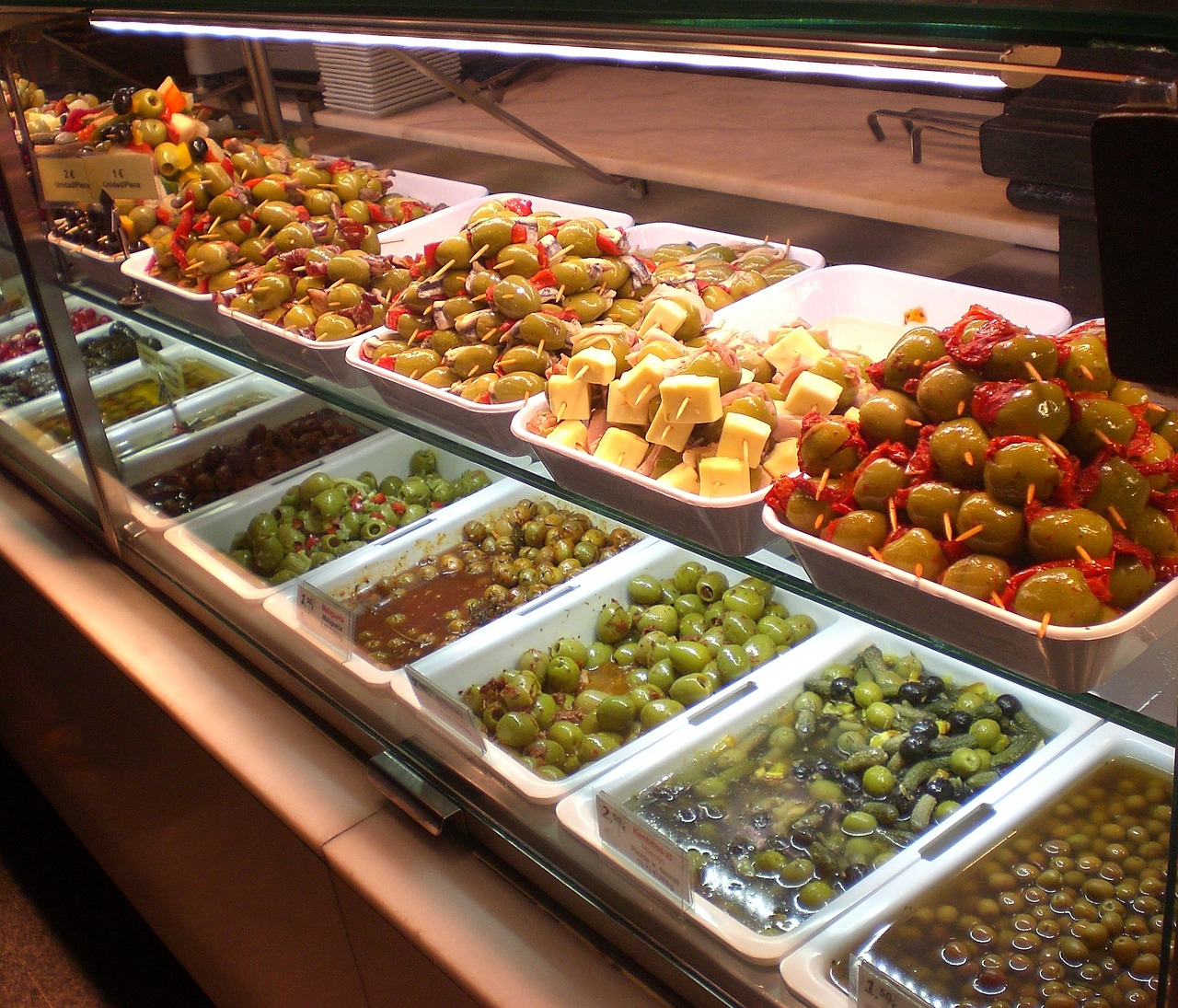
Lastly, the display itself will dramatically impact sales. Make sure your macarons are well-lit. Make sure they displayed with seasonal flair. And make sure customers can easily view the beautiful pastels of your creation.

Use a display case to showcase the latest food trends in a more profitable way. Read our free Guide to Increasing Sales with a Refrigerated Display Case to learn more.

Tecnica: The Foodservice Display Case Built for Millennials

Millennials are the largest demographic group in the history of our nation. They have the most influence. They’re courted more than any other segment of the population. And ultimately, they have the spending power.

By definition according to Accenture, Millennials are born between 1980 and 2000. They are the last generation of the 20th century and are the first fully digital generation. Even more important to business owners, Millennials spend approximately $600 billion each year.

The challenge then for brands, for foodservice operators, is to cut through the noise.

Transparency is Paramount

According to just about any study you can find on the internet, from articles in Forbes to reviews in The Atlantic, the one thing that stands out more than just about anything is the Millennial desire for transparency.

According to a 2016 survey, 94 percent of respondents said they were likely to be loyal to a brand that offers transparency. And for those who switched brands because of transparency, 56 percent said they would likely be loyal for life.

The bottom line is transparency is important, critical even, to future success. In no other industry is this more important than it is in foodservice. Millennials are label readers. They’re a large part of the drive for open kitchens and fast casual concepts like Chipotle where food is literally made in front of you. They want to see what is happening, they want visibility, and they want foodservice operators to be transparent in everything they do.

So how does the Millennial desire for foodservice transparency translate to foodservice displays?

Visibility.

The ability to see all aspects of a product that is out of the shadows and in complete view for everyone to see – this is one of the quickest ways to build trust with Millennial customers. And that’s what Orion by Clabo had in mind when they designed the Tecnica foodservice showcase.

This unique case explores the value of transparency. It’s the product of Orion by Clabo’s goal to create a conceptually transparent display.

With a single, large front glass coupled with redesigned side glass panels, customers get a panoramic view of the interior of the showcase where colors and textures can really stand out. It also plays to Millennial aesthetics with a clean, minimalistic design reflective of current design trends.

Features and Benefits of the Tecnica Foodservice Display Case

  • Optional LED lighting
  • Illuminated front flavor panel
  • Available in linear and 45º designs
  • 9º tilted display deck on gelato/ice cream
  • Reserve pan storage on gelato/ice cream
  • Tilt back front glass
  • Tempered double pane front & side glass, heated on gelato/ice cream cases
  • Stainless steel worktop surface with granite options available
  • RAL custom color options